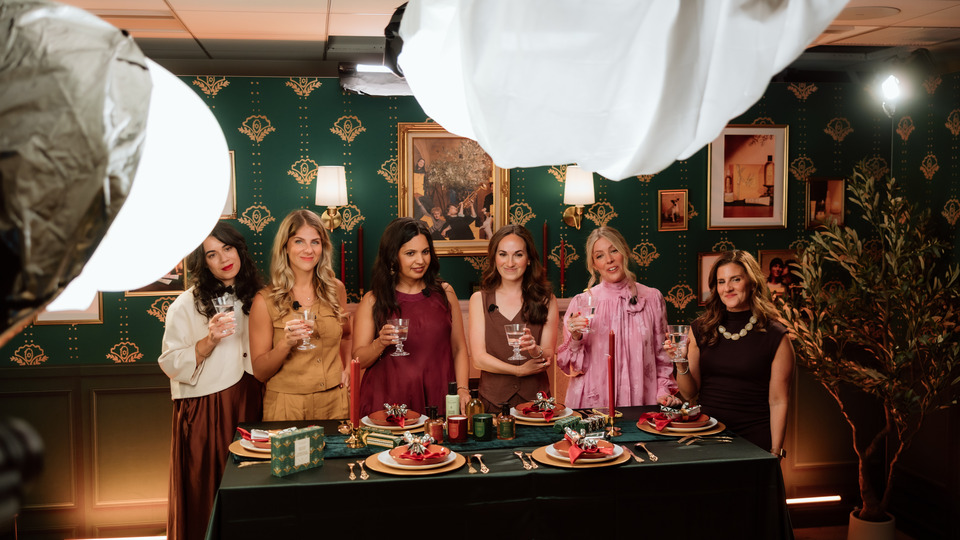
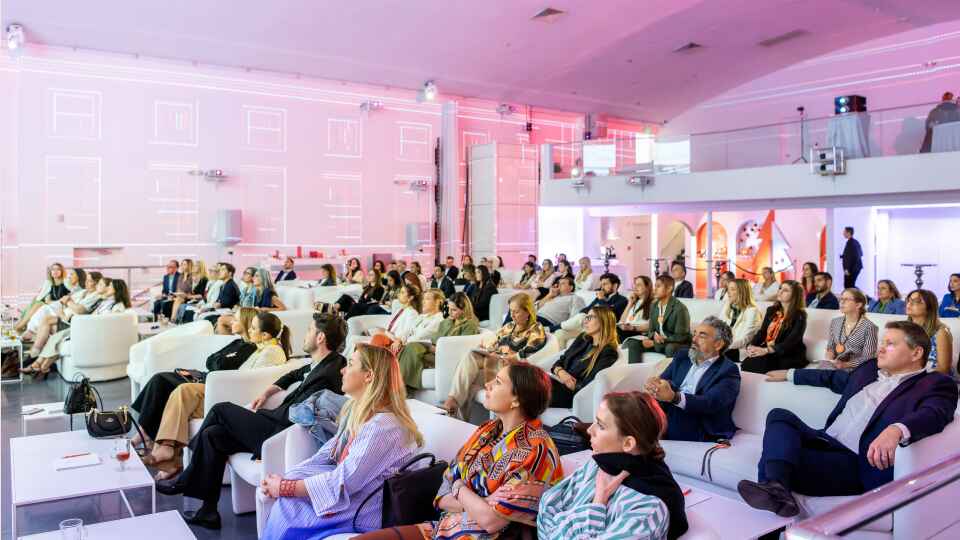
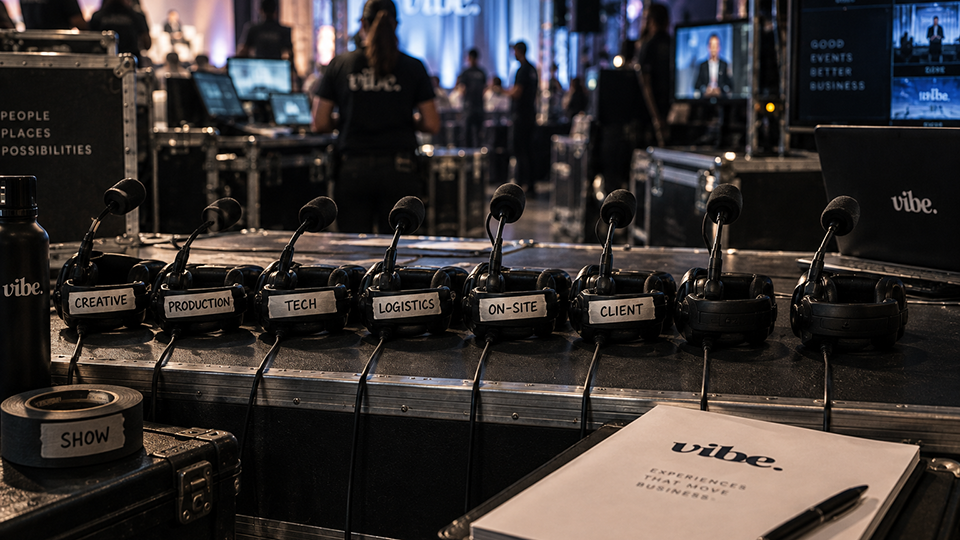
Maintaining your attendees’ focus is a necessity for creating an impactful meeting. To do so, you must tap into their emotions.
“When attendees feel something, they stay present,” says VIBE founder Valerie Bihet. “They participate instead of observing”.
That level of engagement signals investment not just in the event, but in your brand.
Here are five ways to design your event to keep your attendees present and participating so that they will connect with your brand long after the event.
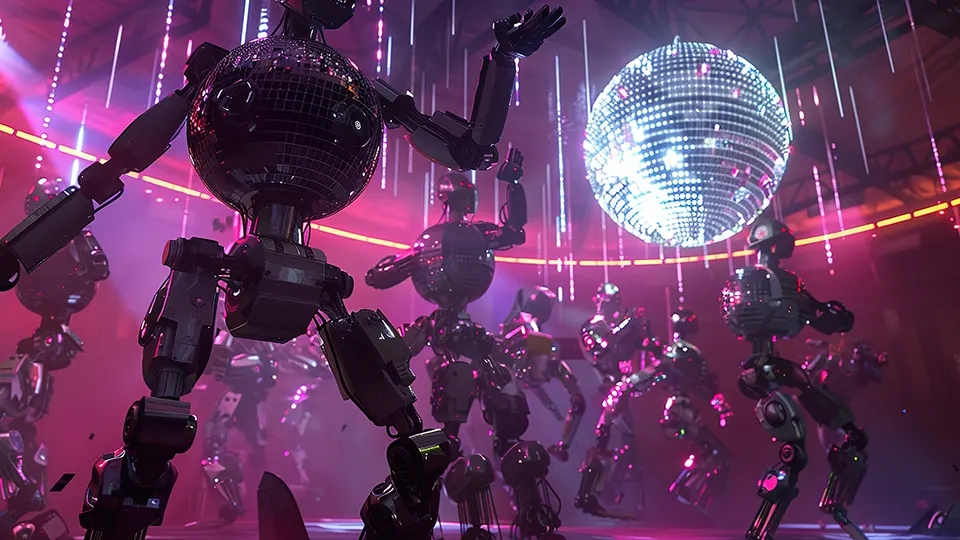
1. Rework Your Agenda’s Flow to Maximize Attention
Event planners should prioritize quality over quantity when designing content. Even great content can become overwhelming without the right balance of learning, entertainment and breaks.
Think of it like an apple pie, with the right ingredient mix featuring:
- 60% fun
- 20% glamour
- 20% work
“You have to design around how people process information,” Valerie says. “After about 20 minutes, they start to go cuckoo.”
Adding rotating breakout sessions, as VIBE did when planning a 350-person event for software company Ivalua, push back against monotony.
The change of pace creates energy and encourages conversations between sessions.
Brain breaks are also valuable for in-person and hybrid events, as they allow participants to quickly recharge and contribute more during scheduled content.
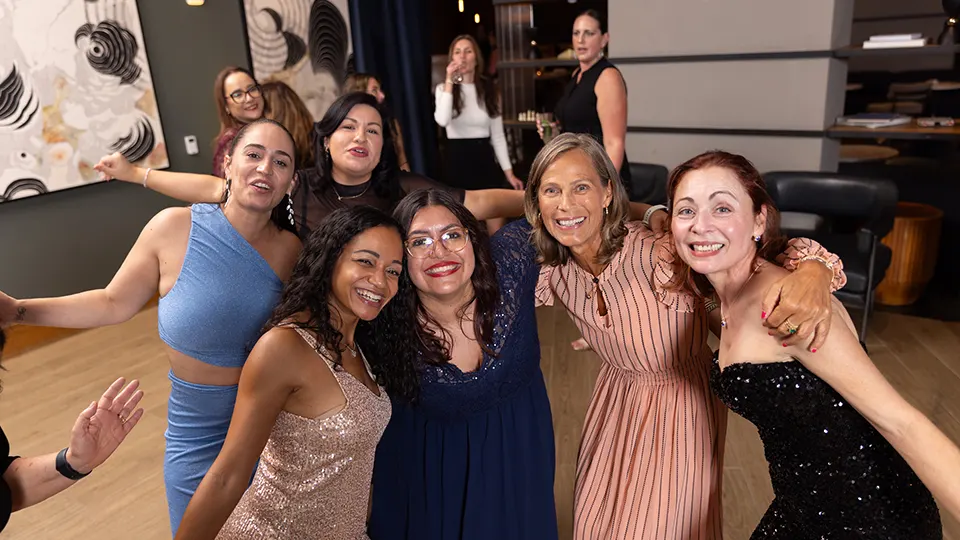
2. Focus on Event Formats That Allow for Easy Flow
An event’s energy should build and evolve throughout the experience. A planner needs to design environments that guide movement in a way that feels intentional and seamless.
Move away from traditional ballroom, single-stage setups, so you can control zones and transitions between high- and low-energy moments.
“Everything needs to play at the right time with the right emotion,” says Valerie.
Aim for smaller, more intimate moments rather than packing too many people in one place at the same time. One way to approach is via a series of smaller events rather than a singular large conference.
VIBE client L’Occitane opted for this route last year with three regional sales meetings in Atlanta, Phoenix and Toronto, along with a hybrid experience for 300 virtual attendees.
The smaller formats allowed for:
- More interaction
- Role play
- Product labs
- Live selling exercises
With the event garnering a +68 Net Promoter Score (NPS) and 80% interactive participation rate among online participants, the results spoke for themselves.
At trade shows, maintaining flow is vital for attracting attendees to your exhibitors. The companies running the booths at events like Ruinart at Art Basel Miami Beach expect to get their money’s worth.
It’s your job as a planner to keep foot traffic moving.

3. Build immersive environments to tell your story
Appealing to all five senses is important because each detail is a reflection of your brand.
You want your presentations to be visually compelling and purposeful. You are telling a story while conducting an orchestra.
“Don’t create a spectacle just for the sake of having a spectacle,” advises Valerie.
Look for themes and tie-ins to brands, like adorning walls with tubes representing gas and energy flow for an anniversary event for executives at Glenfarne.
Similarly, a custom-designed train wagon symbolized a grand journey and garden setting for restoration efforts at the L’Occitane conference.
The goal is for attendees to stop what they’re doing and explore these experiences that you’ve designed to spark the mind and nourish the soul.
“You want an entire sensory experience,” Valerie says.
Experiences stay with attendees, building loyalty and brand recognition.

4. Create a Menu That Feeds Memories and Fuels Attendees.
The right food and drinks will fuel attendees to stay sharp during the programming and add layers to your storytelling. The F&B becomes part of the brand.
Fragrance-infused cocktails are a natural for perfume and cologne companies that appeal to the sense of smell. But don’t stop with the primary sense. Food and drink can transport attendees to a different world just as the design elements can.
Small touches like serving limoncello at a Mediterranean-themed event, add layers to the experience without overdoing it.
“You don’t have to spend a lot to make your immersive elements work,” says Valerie.
The effect is even better for an international event, where you can provide a true taste of the destination. Lean into local favorites in sites particularly known for their cuisine like Singapore, where our client’s guests dined on dim sum, soups and other classic dishes during an incentive trip.
5. Add Activations That Captivate, Not Distract
By now, activations are standard at corporate events. The ones that stand out have clearly been thought through so they feel personal to the attendee but are distinctly tied to the brand.
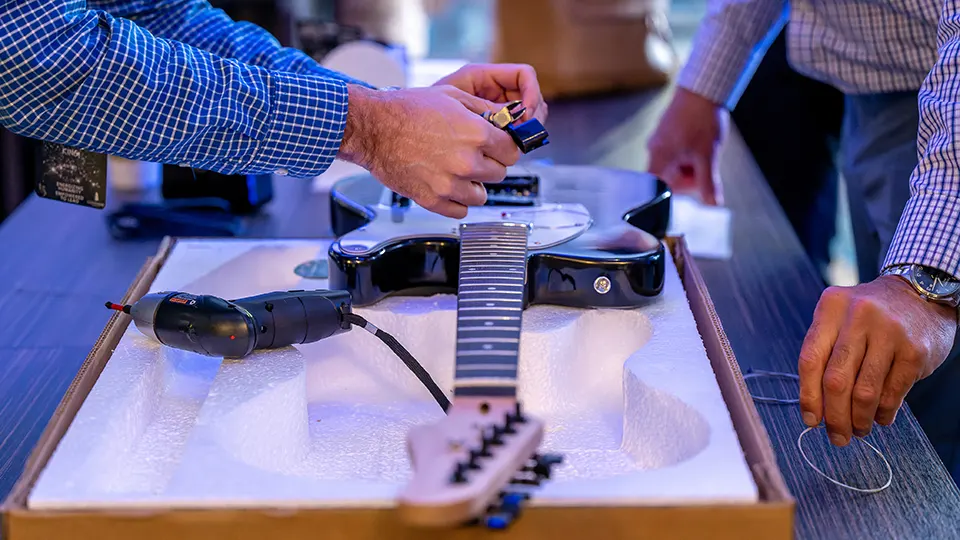
Make it interactive by having attendees build and race a model car or decorate guitars. Add in AR or a VR headset for a multi-dimensional experience at a soccer-themed station or virtual surfing ride.
Activations can make a splash (pun intended) if they convey a theme or message, but come up short if attendees can’t make the connection to your event’s purpose.
“You need to build an activation that creates a memory and not a distraction,” says Valerie.
VIBE is ready to use our experience to help you design an event that captures your attendees’ attention and imagination, improving on-site engagement and post-event retention. Book an initial strategy call with Valerie today.