Your best salesperson is the one most likely to have another offer in her inbox. A bonus settles the ledger. A well-designed incentive trip does what a bonus cannot. It makes her feel chosen, recognized in front of people she respects, and reluctant to leave. That is the real return on an incentive travel program. Most miss it.
Why incentive travel drives employee retention
Corporate incentive travel budgets are holding. Per-person spend reached $5,100 in 2025, and most buyers expect 2026 budgets to keep pace with inflation (Incentive Research Foundation, 2026 Trends Report). Companies are not cutting these programs. They are asking them to work harder.
The program that survives budget scrutiny is the one tied to an outcome leadership cares about. Retention is that outcome. Losing a top performer costs you their pipeline, their relationships, and the months it takes to rebuild both. A program that measurably keeps your best people is not a perk to defend. It is a retention line item that happens to look like a reward.
What top performers actually remember
Top-performing companies spend roughly $3,000 more per salesperson on their best sales trips than their peers (IRF, 2025 Top Performers Study). They are not buying a better hotel. They are buying a stronger message. You are worth the difference.
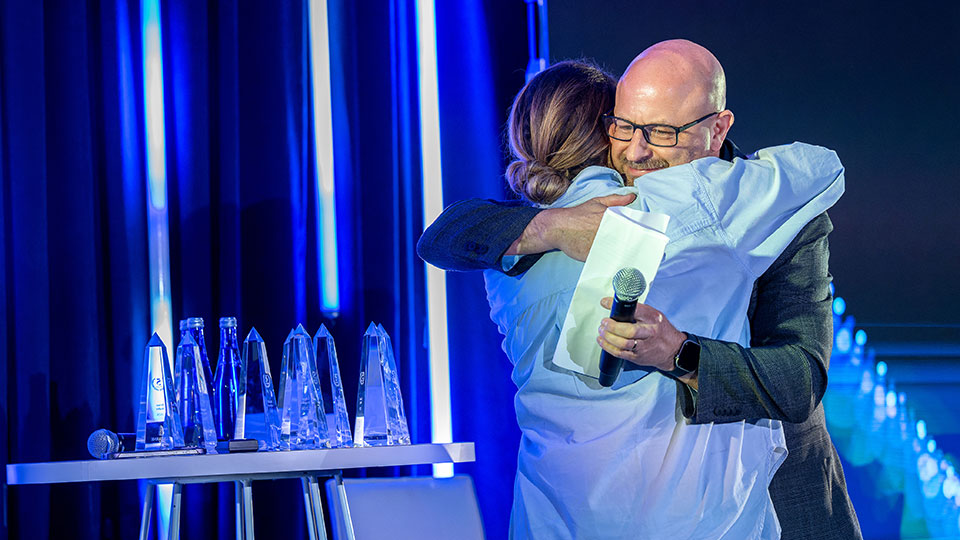
What your performers remember is rarely the resort. It is the ninety seconds when someone in leadership named exactly what they did. We spend as much time designing that moment as we do on the destination management and logistics behind the program, because that moment is what your top performer carries back to her desk on Monday.
Five decisions that make a trip retain
1. Name the behavior before the destination. Finish this sentence before you look at a single resort. This trip exists to keep and motivate the people who ______. Every later decision flows from that line.
2. Make qualifying feel like membership. A clear, visible, fairly designed qualification turns the program into a club worth belonging to. Announce it early and celebrate people as they qualify.
3. Script the recognition moment. Decide who speaks, what they say, and how each performer is named. “Thank you all for your hard work” is forgotten. “Maria reopened the account we lost two years ago” is remembered for years.
4. Protect unstructured time. Relationships form in the gaps, not the agenda. The conversation by the pool and the dinner that runs long are where performers bond with leadership, and bonded people are far harder to recruit away.
5. Plan the follow-up before anyone flies home. A personalized recap, a note from the CEO, an early invitation to next year. The follow-up turns four days into a full year of goodwill.
The mistakes are the mirror image of these decisions. Treating the trip as logistics instead of strategy. Cutting the recognition moment to save time. Inviting so broadly that qualifying stops feeling special. Going silent the moment everyone lands.
How to measure incentive trip ROI
Track the retention rate of attendees against non-attendees over the following year. Track qualifier performance in the quarter after the trip. Tie both back to the behavior you named at the start. When you can show leadership that attendees stayed and sold at a higher rate, the budget conversation is already won. This is the thinking behind our 360+1 Method. An event is worth what it changed.
The 2027 window is open now
The strongest destinations and dates are secured a year or more ahead. Deciding early is not about urgency. It is about choice. The teams shaping their programs now get the destination, the design, and the calendar they want.
Your top performers are deciding, quietly, whether to stay. Give them a reason a competitor cannot match. If you want a 2027 incentive travel program designed to keep the people who earned it, this is exactly the work we do. Design Your 2027 Program.