A multi-city program is won or lost in contracts signed months before the first attendee arrives. In every market, the right venue sourcing partner does three things. It secures the right rooms at rates you can defend. It writes contracts that protect you when attendance changes. And it hands each venue to the team producing your event without losing a single detail. Judge partners on those three things, not on how long their hotel list is.
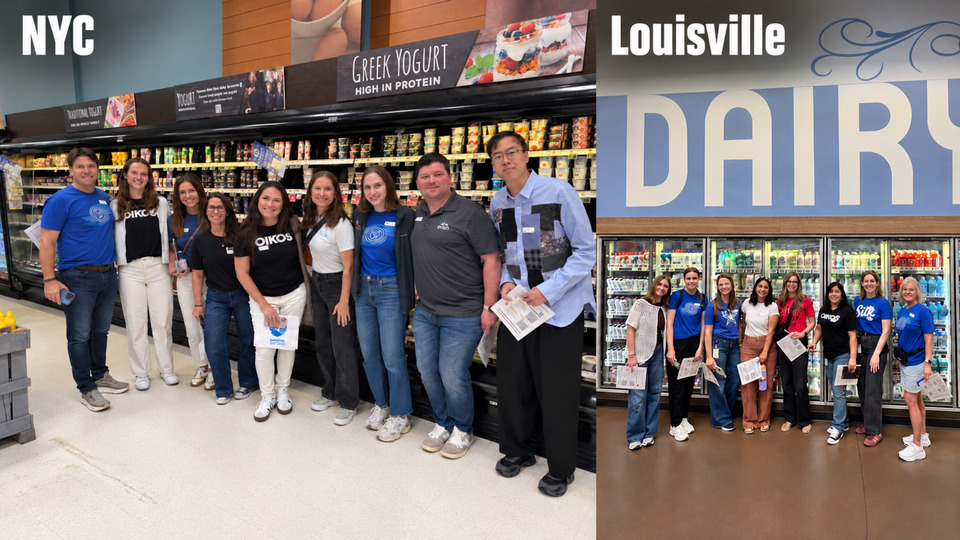
On June 9, Danone Day ran in Louisville and White Plains on the same day. The VIBE Agency sourced it as one program, not two: one set of terms, one brand standard, and one team accountable for both rooms. That decision was made months before anyone walked into either venue. This guide is about that decision.
Most teams compare sourcing partners on reach: how many properties, how many cities, how fast the RFP responses come back. Reach matters. But reach isn’t what costs you money in month seven. That happens when a regional office cuts its headcount and your attrition clause comes due in three cities at once.
This guide gives you the seven criteria we apply to our own programs, the 2026 programs behind them, and the questions that expose a weak partner before you sign.
Why is multi-city venue sourcing harder than it looks?
Every city you add multiplies the variables. Rate structures, labor rules, AV infrastructure, seasonal demand and local vendor networks all change at the city line. Your brand standard does not.
The pressure is already in the numbers. In the 2026 Cvent Global Planner Sourcing Report, a Censuswide survey of 1,650 planners, 72% expect event costs to rise and 35% name staying within budget as their biggest concern. In the same study, 63% now cite attendee engagement as their primary success metric.
Read those findings together. You’re being asked to spend more carefully and deliver more at the same time. That isn’t a sourcing problem. It’s a design problem, and sourcing either solves it or creates it.
When each city is negotiated separately, three things happen. You lose leverage, because no single hotel group sees the full size of your program. You end up with ten slightly different contracts, each with its own exposure. And attendees in one city get a noticeably different event from attendees in another, which weakens the brand recognition you’re paying to build.
What should you look for in a corporate venue sourcing partner?
Apply these seven criteria to every partner on your shortlist, including us.
- Local knowledge in every city, not a national directory. A long hotel list proves reach, not judgment. Ask who on the team has walked the properties in each of your markets in the last 12 months, and which local suppliers they’ve used there recently.
- One negotiation, not ten. Your partner should take your full program to hotel groups as one piece of business. That’s how your volume turns into leverage on rates, concessions and complimentary rooms.
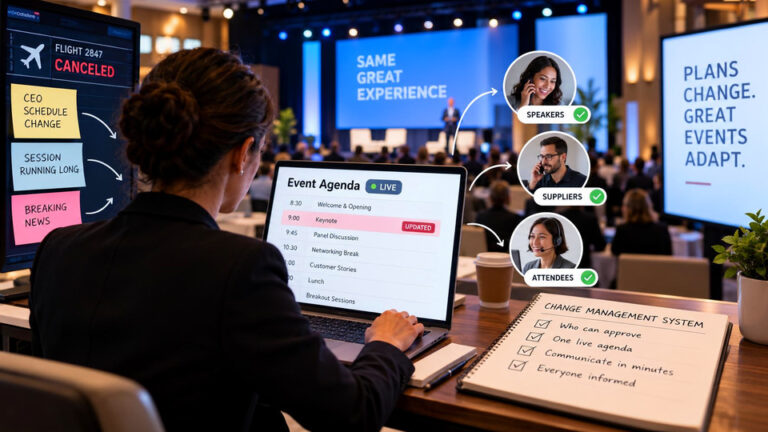
- Contracts written for attendance that changes. Budgets break on attrition, cancellation, F&B minimums and room block review dates. A strong partner sets review dates you can act on and terms that let you release rooms before penalties apply.
- Venues chosen for the outcome, not just the rate. The same Cvent study found that 48% of planners now source non-hotel venues such as restaurants and galleries. The cheapest ballroom becomes expensive if it can’t deliver the engagement you’re measured on.
- One brand standard across every city. Ask to see the production system: how the room set, signage, menus and run of show are specified once and repeated, so Chicago and Miami feel like the same company.
- No gap between sourcing and production. Every handoff is a place where a detail gets lost. If one firm sources and another produces, ask who owns the contract on event day.
- Reporting that improves the next cycle. Ask for room pickup, F&B actuals against minimums, and attendee feedback by venue. Without that data, next year’s sourcing starts from opinion.
What do these criteria look like in a real program?
Criteria are easy to agree with. Here’s how four of them worked in programs we produced in 2026.
One producer, four tracks: Fleetio
Criterion 6: no gap between sourcing and production. Fleetio’s NASCAR season ran across Charlotte, Darlington, Homestead and Talladega. That meant four tracks, four sets of local rules, and one producer accountable at every one. Nothing was handed off, so nothing was lost in a handoff.
Four programs in four months: Dior
Criteria 1 and 7: local knowledge, and reporting that improves the next cycle. Between July and September, we produced four Dior programs: Mexico City, a training program across the USA, 15 guests in New York, and 250 across Chicago and Miami. Each one built on what the one before taught us about the audience and the venues. That’s what a sourcing cycle looks like when the learning carries forward.
A venue chosen for the business moment: Porsche
Criterion 4: venues chosen for the outcome, not just the rate. Porsche’s annual conference ran as a hybrid program alongside the opening of its Miami office. The venue decision was never only about capacity and price. It was about where the brand needed its people to be standing that day.
Same discipline, any size: NTT Data
Every criterion, at 11 people. Our programs range from 11 guests for NTT Data in San Francisco to 250 for Dior across Chicago and Miami. The discipline stays the same at any headcount: we choose the venue with the run of show already in mind.
Our case studies have more detail on each of these programs.
Should venue sourcing and event production sit with one partner?
For a single meeting in one hotel, a sourcing-only firm can be the right call. For a multi-city program, one owner wins, because the person who negotiated the contract is the person who enforces it.
That’s the logic behind 360+1, our proprietary approach. Most agencies offer 360. VIBE delivers 360+1. The 360 is full-service strategy, creative, production, logistics, technology, and global execution, all under one roof, one team, and one point of accountability. The +1 is the human element: the instinct, empathy, and cultural fluency that transform a well-executed event into an experience people remember. Neither one is possible when someone is busy fixing a contract on event day.
"Alors, here is the test I give every client. Ask who will be standing in the ballroom when the banquet captain says the room set is not what was contracted. If that person works for a different company from the one that negotiated the contract, you have found your weak point before your attendees do."
Valérie Bihet, Founder and CEO, The VIBE Agency
What questions should you ask in a venue sourcing RFP?
Ask these in writing before you shortlist anyone. The answers will tell you more than the proposal deck.
- Which of our cities have you produced in during the last 12 months, and for whom?
- Will you present our program to hotel groups city by city, or as one piece of business?
- Walk us through the attrition and cancellation terms you would propose, and the review dates attached to them.
- Who is on site in each city on event day, and do they work for you?
- How do you hold one brand standard across venues with different layouts and suppliers?
- What will we receive after the program, and how will it shape the next sourcing cycle?
If a partner answers the fourth question with a name instead of a job title, they’ve already told you how the event will run.
Where to start this week
Pull the contracts from your last multi-city program. For each city, find three numbers: the attrition threshold, the room block review date, and the F&B minimum. If you can’t find all three in ten minutes per city, you’ve found your first sourcing problem. Fixing it before you sign the next contract costs nothing.
Planning a program across several cities?
Since 2004, The VIBE Agency has produced 2,000+ events for brands that expect the same standard in every room, and was recognized on the 2026 Inc. 5000 list, ranking #229 in Business & Corporate Services. Send us your markets and dates, and we’ll send back a one-page contract risk map for your program. It shows where your attrition exposure sits, city by city, and where your volume buys you the most.
Frequently Asked Questions
What is corporate venue sourcing?
Corporate venue sourcing is the process of finding, evaluating and contracting event spaces and hotel room blocks for business meetings, conferences and corporate programs. It covers research, site visits, rate and concession negotiation, and the contract terms that set your financial exposure.
How far in advance should you source venues for a multi-city program?
For programs of 200 or more attendees across several cities, start 9 to 12 months out. Allow more time for peak-season dates and high-demand cities, where the best properties commit their group space first.
What is the difference between venue sourcing and event production?
Venue sourcing secures the space and the terms. Event production designs and runs what happens inside it: staging, AV, food and beverage, run of show and on-site management. When one team owns both, the venue is chosen for the event you're producing.
Can a venue sourcing partner lower your event costs?
Yes, mainly through consolidated negotiation and a structured process. In Cvent's 2026 study, 97% of planners said a structured RFP and sourcing process saves time and money, and 42% reported cost reductions of 10 to 30%.
What is an attrition clause, and why does it matter?
An attrition clause sets how many contracted rooms you can release without paying for them. If attendance drops below that threshold, you pay the difference. In a multi-city program, weak attrition terms in several cities can turn one headcount change into several penalties.
How do you keep a brand consistent across venues in different cities?
Specify the experience once and repeat it: room set, signage, menus, technical rider and run of show. Then put one accountable lead on site in every city, working from that same standard.