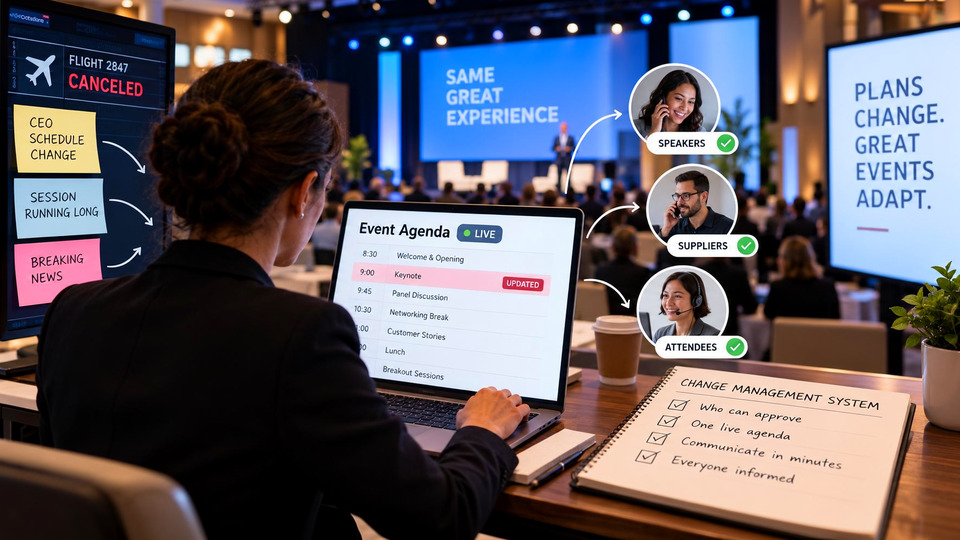
The best meeting planning services handle agenda changes with a system, not heroics. They agree before the event who can approve a change, keep one live version of the agenda, and can tell every speaker, supplier and attendee within minutes. When you compare partners, ask to see that system in writing. Calm on the day is designed months earlier.
Agendas change. A keynote’s flight is canceled, a CEO’s calendar moves, a session runs long, a news story makes a slide wrong overnight. You cannot prevent the change. You can decide, in advance, whether your audience ever notices it.
Why are agenda changes more common for corporate meetings now?
Because the forces behind them have multiplied. In the Northstar Meetings Group and Cvent PULSE survey of December 2025, 67 percent of planners named flight delays, cancellations and air-travel reliability as a concern for their programs. In the same survey, 41 percent said the 2025 US government shutdown disrupted their meetings.
The pressure has not eased in 2026. The August 2026 PULSE survey found that more than a third of planners still see effects from the Middle East conflict, and more than 30 percent of those have postponed or canceled an event as a result. Booking windows are also tightening, with more meetings planned less than nine months out. Shorter lead times leave less slack when something moves.
Planners feel it. In a Convene and BizBash survey of 247 corporate planners, 76 percent named last-minute changes among the most frustrating parts of the job, ahead of proving ROI. The change itself is rarely the problem. The scramble around it is.
What should you look for in meeting planning services that handle agenda changes well?
Look for seven things. Whether you hire us or someone else, ask to see each one before you sign, not after the first crisis.
- Decision rights agreed in advance. One named person on your side approves changes, with a backup. When nobody knows who decides, a 10-minute fix becomes a two-hour email chain.
- One live agenda. A single source of truth that the stage manager, AV team, registration desk and event app all read from. Three versions of the run of show is how a speaker walks on to the wrong slide.
- A modular run of show. Sessions built in blocks that can be moved, shortened or swapped without breaking catering, room turns or transport.
- A plan B for every critical speaker. A recorded version, a moderator ready to step in, or a pre-briefed internal leader. Decided weeks ahead, not in the green room.
- Attendee messaging in minutes. Prewritten templates for app, email, text and stage announcements, so guests hear the change from you before they hear it from each other.
- Supplier contracts with room to move. Clear terms with venues, caterers and AV on timing shifts, so a later lunch costs a call, not a renegotiation.
- A remote path for every presenter. A tested hybrid setup means a stranded speaker can still deliver from a hotel room or an airport lounge.
A partner who can show you all seven is selling you calm. A partner who promises flexibility without showing the system is selling you hope.
What should happen in the first 30 minutes after an agenda change?
Five steps, in this order. Speed matters less than sequence.
- Confirm the change with the decision owner. Never act on a rumor from the hallway.
- Update the one live agenda. Every other step reads from it.
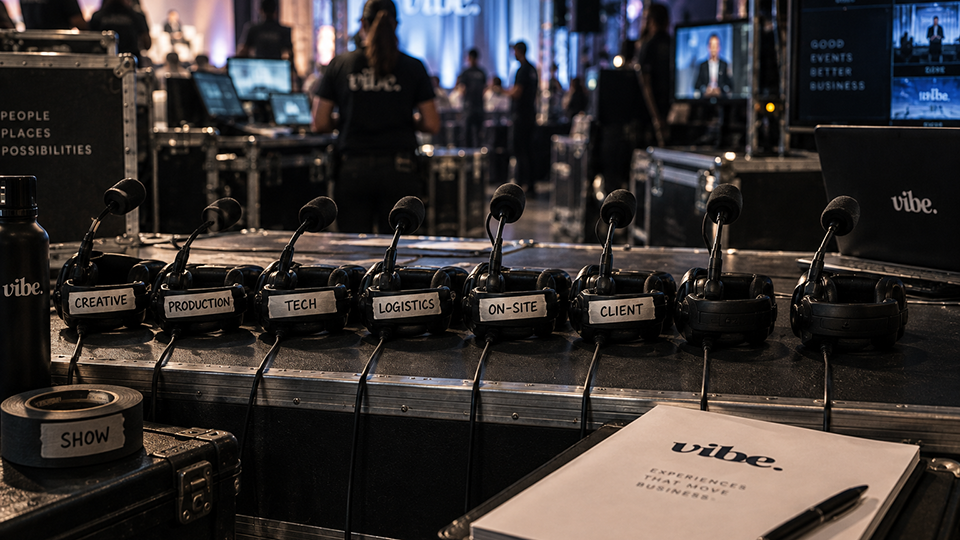
- Brief the people on headsets. Stage manager, AV, catering and transport hear it before anyone on stage does.
- Brief the affected speakers and executives. Give them the new time, the new length and what changed around them.
- Tell the attendees. One clear message through the app and from the stage, with what it means for them.
That sequence only works if it was designed before the event. In June we produced Danone Day in Louisville and White Plains on the same day, built as one program with one agenda, so a change in one city could reach the other in the same minute. One producer, one source of truth, two rooms that never had to guess.
"Your guests should never see the change. They should only see the new plan, already working. Alors, the real work happens months before, when we decide who calls it, how fast, and what moves first."
Valerie Bihet, Founder and Executive Producer, VIBE
Build the change plan before you need it
Send us your next agenda and we will mark where it is most likely to move, who should decide, and what the backup looks like. Keep the notes, whoever you choose to produce it.
Frequently Asked Questions
What do meeting planning services do when the agenda changes?
Good meeting planning services follow a change protocol agreed before the event. They confirm the change with the named decision owner, update one live agenda, brief production crew and speakers, adjust suppliers, and message attendees through the app and from the stage. The goal is that guests experience a new plan, not a disruption.
How do you plan for a speaker canceling at the last minute?
Decide a plan B for every critical speaker weeks ahead. Options include a recorded version of the talk, a moderated panel that can absorb the slot, a pre-briefed internal leader, or a remote link. Confirm the backup with the speaker's team, so the substitute content stays on message.
Who should approve agenda changes during an event?
One named person on the client side, with one named backup, agreed in writing before the event. The agency's producer recommends; the client decision owner approves. Clear decision rights turn a change into a ten-minute task instead of a long thread with too many approvers.
How quickly should attendees be told about an agenda change?
Within minutes of the decision, and before word spreads informally. Use prewritten templates for the event app, email or text, and a short stage announcement. Tell guests what changed, what it means for them, and where to go. Silence invites guesses, and guesses spread faster than updates.
Do agenda changes increase event costs?
They can, especially when supplier contracts have no flexibility on timing. Negotiate clear terms on schedule shifts with venues, caterers and AV teams, and hold a contingency line in the budget. Most changes cost little when planned for, and a great deal when improvised.
Can hybrid technology help with agenda changes?
Yes. A tested remote setup lets a stranded speaker present from anywhere, and a modular stream lets you move or shorten sessions without losing the online audience. Assign one person to own the remote audience, so changes reach them as quickly as they reach the room.